
How bold are you about your faith? Honestly, think about it. On a scale of one to five, how would you rank yourself? I fear many of us are in the closet. Our neighbors and coworkers don’t even know we’re Christian. If you’re in this situation, then this article is for you.
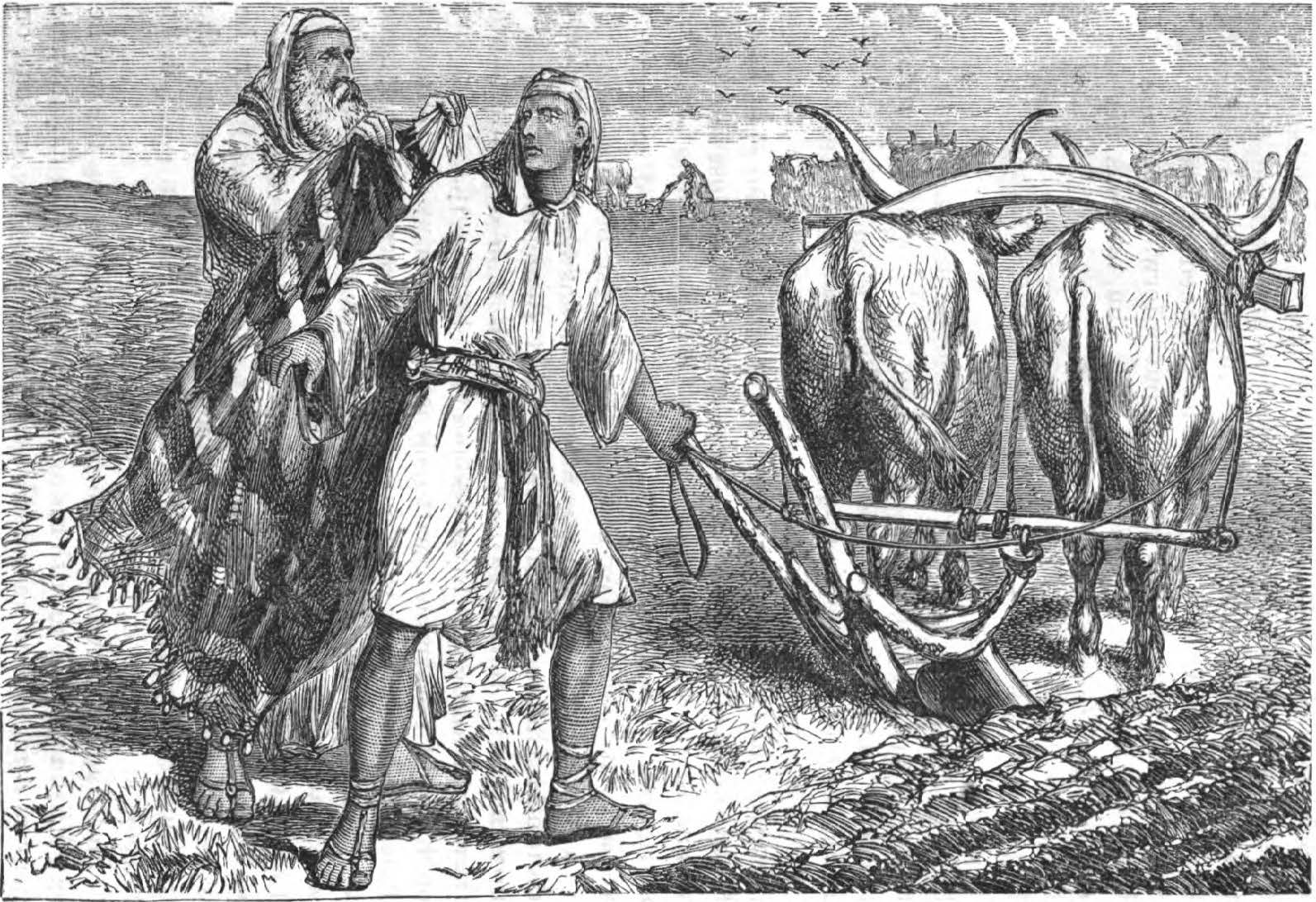
Elisha is often overshadowed by his more famous mentor, Elijah, but Elisha was an important person in his own time who has much to teach us today. Scripture introduces us to him while he’s plowing the field.
1 Kings 19:19. So he set out from there and found Elisha son of Shaphat, who was plowing. There were twelve yoke of oxen ahead of him, and he was with the twelfth. Elijah passed by him and threw his mantle over him.
Shaphat, Elisha’s father, is unknown elsewhere in Scripture. Plowing with oxen is a monotonous and physically draining job. The impression I get is that Elisha was just another guy—a working man from a typical family. He was just going about his business, keeping the plow straight while his oxen were pulling it when suddenly the most famous prophet in the land showed up. Elijah was an extraordinary man of God known for working jaw-dropping miracles. Everyone knew who he was. Here’s a list of his miracles
Elijah’s Miracles
- He predicted a drought. (1 Kings 17:1)
- Ravens fed him by a brook (1 Kings 17:6)
- He multiplied a widow’s oil and flour. (1 Kings 17:8-16)
- He revived the widow’s son. (1 Kings 17:17-24)
- He called fire down from the sky to prove Yahweh is God over against
450 false prophets. (1 Kings 18:38) - He called fire down (twice) on groups of 50 who came to arrest him.
(2 Kings 1:10, 12) - He predicted a rainstorm that ended the drought. (1 Kings 18:41-45)
- He split the Jordan with his mantle. (2 Kings 2:8)
- He ascended into the sky in a chariot of fire. (2 Kings 2:11)
By throwing his mantle over Elisha, Elijah is offering to train Elisha. This is like Yoda going up to Luke Skywalker and saying, “Train with me, you will.” It’s like Elon Musk showing up at a business college and choosing one student to mentor. Elijah walks away, and Elisha has to decide what to do.
1 Kings 19:20. He left the oxen, ran after Elijah, and said, “Let me kiss my father and my mother, and then I will follow you.” Then Elijah said to him, “Go back again, for what have I done to you?”
Elisha runs after him, eager to seize the moment. He asks to bid farewell to his parents and Elijah responded in an enigmatic way. Simon de Vries helpfully explains what’s going on here.
Elisha immediately recognizes what the mantle means and runs after Elijah. He has a request to make, however—one that is met with skepticism on Elijah’s part. Elisha only wants time to kiss his father and mother farewell. This sounds reasonable enough, but Elijah’s response suggests that Elisha may be vacillating and will use the moment at home to drop out or hide away. The question, “But what do I have to do with you?” is therefore a challenge: it is up to Elisha to decide whether or not
he will belong to Elijah permanently.1
Elisha is going to have to make up his mind. Is he all in, or is he out? Those are the only two options Elijah is affording him.
1 Kings 19:21. He returned from following him, took the yoke of oxen, and slaughtered them; using the equipment from the oxen, he boiled their flesh and gave it to the people, and they ate. Then he set out and followed Elijah and became his servant.
This extreme act bespeaks Elisha’s total commitment to training with Elijah. He’s slaughtered his oxen and burned his plows, taking away the opportunity to return to his old life. This is a bold move! Elisha could have just told his parents goodbye and followed Elijah. No one told him to torch his farm equipment. Still, I see the wisdom in his decision. What about you? Have you committed yourself to God? Is He calling you to make a new commitment this year that is daunting? Perhaps you need to burn your plows too?
Let’s return to Elisha’s story. After he had been with Elijah for some time, Elijah started to leave Elisha behind.
2 Kings 2:1–2. 1 Now when the LORD was about to take Elijah up to heaven by a whirlwind, Elijah and Elisha were on their way from Gilgal. 2 Elijah said to Elisha, “Stay here, for the LORD has sent me as far as Bethel.” But Elisha said, “As the LORD lives and as you yourself live, I will not leave you.” So they went down to Bethel.
Elisha is not having it. He’s not going to abandon Elijah regardless of what may come. Elisha is bold and committed. After a while, Elijah says, “Stay here, for the LORD has sent me to Jericho” (v4). Once again, Elisha refuses to leave. Then Elijah says, “Stay here, for the LORD has sent me to the Jordan” (v6). Yet again, Elisha continues to follow him. They arrive at the Jordan River and prepare to cross.
2 Kings 2:8. Then Elijah took his mantle and rolled it up and struck the water; the water was parted to the one side and to the other, and the two of them crossed on dry ground.
The casualness of this miracle strikes me. What kind of relationship did Elijah have with God that he could just smack the river with his clothing, and God split it? He’s on a level with God unprecedented in Scripture. Finally, Elijah asks Elisha what he wants.
2 Kings 2:9. When they had crossed, Elijah said to Elisha, “Tell me what I may do for you before I am taken from you.” Elisha said, “Please let me inherit a double share of your spirit.”
This is a bold move! A short time ago, Elijah had said in despair, “I am no better than my fathers” (1 Kings 19:4). Jesus said, “It is enough for the disciple to be like the teacher” (Mat 10:25). And here’s Elisha saying, “I want to be twice as powerful as my mentor!” I’m astounded at his bravado.
There’s power in asking for something. Do you have the chutzpah to ask God for something huge? James said, “You do not have because you do not ask” (James 4:2). Rather than looking at Elisha as an arrogant or greedy person, perhaps we should learn from his example. After all, Elijah didn’t rebuke him, saying, “You little twerp! You were no one until I found you. How dare you ask for twice the spiritual power I have!” No, that’s not what happens.
2 Kings 2:10. He responded, “You have asked a hard thing, yet if you see me as I am being taken from you, it will be granted you; if not, it will not.”
That’s a yes! He said yes! Can you believe it? All Elisha needed to do was stick with him until he was taken, and he would get a double portion of the spirit. That’s the power of the ask. Again, I want you to think about my earlier question: “What bold move is God calling you to make this year?” Do you need to ask him for something big? Why not? Elisha did, and it worked out for him.
2 Kings 2:11-14. As they continued walking and talking, a chariot of fire and horses of fire separated the two of them, and Elijah ascended in a whirlwind into heaven. Elisha kept watching and crying out, “Father, father! The chariots of Israel and its horsemen!” But when he could no longer see him, he grasped his own clothes and tore them in two pieces. He picked up the mantle of Elijah that had fallen from him and went back and stood on the bank of the Jordan. He took the mantle of Elijah that had fallen from him and struck the water. He said, “Where is Yahweh, the God of Elijah? Where is he?” He struck the water again, and the water was parted to the one side and to the other, and Elisha crossed over.
With Elijah’s mantle in hand, Elisha struck the water of the Jordan, and nothing happened. At this point, he could have easily given up. He could have said, “Who was I to ask for a double portion of the spirit? That was ridiculous. I don’t even have half the spirit. This water is not moving. It’s mocking me with its silence.” So many times, we give up at the first sign of hardship. We pray and pray for someone to be healed, and it doesn’t happen, so we give up. We conclude, “Prayer doesn’t work.” Failure is ok. It’s part of walking with God. We all deal with it. You can’t let failure take you out. You’ve got to get back up and keep going—like Elisha.
I love how undaunted Elisha was. He smacked that water, and nothing happened. He exclaimed, “Where is Yahweh, the God of Elijah? Where is he?” Then he hit the water again. And it worked! This was another bold move! Elisha believed the promise. Elijah told him it was a hard thing, but if he stuck with him until the end, he would get the double portion. Elisha had faith. So, when it didn’t work, he didn’t give up. He persisted, and suddenly the miraculous happened.
When I consider Elijah and his miraculous ministry, I can’t help but ask, “How could Elisha possibly be greater?” Elijah had so many miracles. He predicted a drought as well as an end to it years later. He had ravens deliver him food. Three times, he called fire down from heaven. He raised a boy from the dead! And yet, Elisha was greater. Take a look at his list of miracles:
Elisha’s Miracles
- He split the Jordan with Elijah’s mantle. (2:13-14)
- He healed the waters of Jericho with salt. (2:19-22)
- He prophesied of water coming to save a military campaign. (3:15-19)
- He cursed some youth, resulting in a bear attack. (2:23-24)
- He multiplied a widow’s oil. (4:1-7)
- He predicted the Shunammite woman would give birth. (4:16-17)
- He raised the Shunammite woman’s son. (4:32-35)
- He purified a stew. (4:40-41)
- He multiplied loaves. (4:42-44)
- He healed Naaman’s leprosy. (5:1-27)
- He floated an axe-head. (6:1-7)
- He predicted where the Syrian army was. (6:8-12)
- He struck the Syrian army with blindness. (6:18)
- He healed the Syrian army of blindness. (6:20)
- He predicted the restoration of the economy in Samaria. (7:1)
- He predicted the recovery and subsequent murder of the Syrian
king. - He predicted the number of Israel’s victories over Syria. (13:20)
- He raised to life someone who touched his bones. (13:21)
I count nine miracles for Elijah and eighteen for Elisha. He really did outshine his master. He was bold and unafraid to take big steps of faith—and it paid off. He played a critical role in the last days of Northern Israel’s kingdom prior to the coming of the Assyrians. Elijah and Elisha called the people back to worshipping Yahweh instead of other gods like Baal and Asherah. They trained up scores of prophets and mightily confronted idolatry. Elisha established peace with their neighbor in the north, both through healing Naaman’s leprosy and by blinding and then healing the Syrian raiding party. And still, Israel did not repent. They continued in their disobedience to God.
This teaches us one last important lesson. Don’t judge yourself based on the response of others. Judge yourself based on what God says. So many of the prophets served God wholeheartedly amid criticism and disbelief. Still, they remained faithful, serving as stalwart examples for us today. Our culture in America has shifted dramatically. Gone are the days of traditional marriage values. Gone are the days of recognizing the value of churches and denominations. Gone are the days of valuing public prayer. As our society continues to drift away from biblical Christianity, we will face increased opportunities to be bold like Elisha. After all, the light shines all the more brightly when surrounded by darkness.
What bold move are you thinking of making for God this year?
- Vries, Simon John de. 1 Kings Word Biblical Commentary 12. Accordance electronic edition, version 2.2. Thomas Nelson: 2003, Nashville.[↩]





















Thanks for that message. Here in New Zealand it is so easy to be a ‘comfortable Christian’. As you have challenged us; “Is that what God is calling us to?” To be bold like Elisha, like the Apostle Paul, or more importantly, to be like Christ and serve God wholeheartedly, this is what I need to learn more of and then put into action.
Thanks again Sean.